Full episode · 1 h 10 m
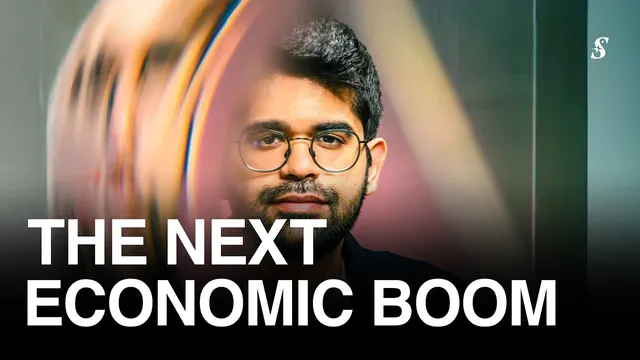
Thrive Capital’s Dr. Nworah Ayogu on Why Neuralink Is More Interesting Than SpaceX
Thrive Capital's Nworah Ayogu argues AGI believers should be long healthcare, a system that spent $40 trillion in a decade without moving life expectancy.
 Sourcery · Molly O'Shea with Nworah Ayogu
The best minutes
- 40:00Early reasoning models solved hard diagnostic cases doctors often miss3 min
- 55:43How Cadence's remote monitoring saves Medicare $2.5M a week5 min
- 48:08The US spent $40 trillion in a decade with no life expectancy gain4 min
Summary · 6 min read instead of 1 h 10 m
Nworah Ayogu is a Harvard-trained physician and internist who joined Thrive Capital about two and a half years ago to focus on healthcare. Ayogu was on the founding team of Cityblock Health, then at Amazon served as the first chief medical officer of Amazon Pharmacy and launched and ran Amazon Clinic, pieces that, with One Medical, became Amazon Health.
Nworah Ayogu argues that anyone who believes in AGI should be long healthcare, because people will want more time and better time, and that AI will reshape the whole drug value chain, from discovery to manufacturing, clinical trials and commercialization. Ayogu says the US spent about $40 trillion on healthcare over the last decade without moving life expectancy, but that today's science should take it from 80 to 100 over the next 10 years if the system does its job. Thrive's companies are the evidence Ayogu offers: Isomorphic Labs chasing far higher drug success rates, Neuralink and Fortell building hardware that gives people back lost abilities, OpenEvidence reaching two-thirds of US physicians in three years, and Cadence saving Medicare $2.5 million a week. Ayogu also calls OpenAI one of the largest healthcare providers in America, with 300 million people asking ChatGPT health questions every week, and says the nation needs a 10x nurse more than a 10x engineer.
Minute by minute
- 1:48
AI will reshape biotech's whole value chain. Ayogu says AI in drug discovery will move through biotech's whole value chain, into manufacturing, clinical trials and commercialization, the way the AI labs' trade flowed into compute, memory and energy. Models have gotten much better at designing molecules that bind a target; the harder next step is predicting a drug's effects and side effects. Unlike code, effects have to be tested in cells, animals and people, and the models need new data before they can predict them.
- 8:31
Isomorphic is chasing 90% success rates. Molly O'Shea cites a Biohub panel goal of 88 to 90% success rates for a process that fails more than 90% of the time. Ayogu says Demis Hassabis, who won the Nobel Prize for AlphaFold, and the Isomorphic team have long planned the steps beyond protein folding; lifting success from 5% to 60% would change what drugmakers attempt and shift the bottleneck to trials and manufacturing. Thrive wants "bilingual" companies, Ayogu says, and Isomorphic's AI researchers and chemists are world class.
- 14:08
Neuralink gives paralyzed patients function back. Ayogu's critique of healthcare is that it extends life better than it improves quality of life. Neuralink's implant lets people with ALS or paralysis, including veterans hit by IEDs, control a computer or robotic arm with their minds, and another trial let someone who couldn't speak, speak. Its threads, now over 1,000, are so small that it built its own surgical robot, and it insourced a pathology lab because safety is critical; Ayogu credits president DJ and contagious talent density.
- 20:36
Neuralink is more interesting than SpaceX. Ayogu's hot take is that Neuralink is a more interesting company than SpaceX, because "the brain is vaster than space." Nobody reaches space or invents silicon chips without the brain, which Ayogu calls a more efficient engine of compute than every chip NVIDIA has ever made.
- 23:18
Fortell's hearing aid broke the rating scale. Ayogu says hearing loss affects 1.5 billion people and is the greatest modifiable risk factor for dementia, yet most hearing aids amplify all sound. Founder Matt DeJong's team taped out custom chips at TSMC and uses semantic noise processing to tell a conversation from a passing car. A third-party group whose top rating had been 4.5 on a five-point scale gave Fortell a six, and users include Steve Martin and Henry Kravis.
- 30:14
Amazon built healthcare trust in steps. Ayogu describes a career of making good things big and big things good, from the founding team of Cityblock Health to Amazon. There, Ayogu says, the team started with a pharmacy because Amazon's logistics gave it an edge, then tested trust in low-acuity transactional care with Amazon Clinic, then in relational care by buying One Medical. Those pieces became Amazon Health.
- 33:14
AGI believers should be long healthcare. Ayogu says anyone AGI-pilled should be long healthcare, since people will want more time and better time, and expects more trillion-dollar healthcare companies. Merck's Keytruda earned more in 2025 than all the major AI labs combined, Ayogu notes, and paired with a Merck and Moderna mRNA vaccine it made melanoma 50% less likely to recur within five years. In Ayogu's view, Lilly beat first-mover Novo by getting supply out a year earlier and leaning into commercial moves like Lilly Direct.
- 40:00
OpenAI's reasoning model aced hard diagnoses. Ayogu says Thrive set up meetings between OpenAI's leaders and top biotech, payer and health system CEOs. Before o1's release, Ayogu tested it on New England Journal of Medicine cases; it went 10 out of 10 where top doctors might get two, yet the CEOs treated Ayogu like a heretic, and one biotech CEO who saw AI only for customer service has since announced billions in spending. Ayogu says adoption is heaviest in back-office billing and spreading to front-office calls and in-office scribes.
- 44:09
Doctors adopted OpenEvidence faster than Epic. Ayogu says doctors don't dislike technology, just the bad health IT they are forced to use, so hearing them rave about OpenEvidence stood out; after trying it, Ayogu drove to the house of Dan, a college classmate, to meet. OpenEvidence reached two-thirds of US physicians in three years, while Epic, healthcare's behemoth, has under 50% after 40 years.
- 46:12
$40 trillion bought no longer lives. Ayogu says the US spends $5 trillion a year on healthcare, projected to hit $9 trillion by the end of the decade; it is 20% of all jobs and six times defense in the federal budget. Life expectancy rose from 50 to 70 between 1900 and 1950 and from about 70 to 80 between 1990 and 2010, but about $40 trillion over the last 10 years hasn't moved it, which Ayogu calls an indictment of the system. Done right, Ayogu says, the next decade should take it from 80 to 100.
- 51:40
N-of-1 therapies force a price question. Ayogu points to baby KJ, born with a rare genetic disease that kills more than half of affected babies and for which the only treatment is a liver transplant. A Penn team designed a custom gene-editing therapy, delivered it at seven months, and the child is now two, walking and talking. It cost about a million and a half dollars; Ayogu would pay that for a child's life, but says the infrastructure has to make such treatments cheaper and more repeatable.
- 55:43
Cadence's AI monitoring cuts hospitalizations. Ayogu says Cadence mails devices such as blood pressure cuffs and scales to sick patients, with AI and staff watching the readings and feeding them into health systems' records; it covers about 7,000 sites of care and over 100,000 patients. Published results show 25% fewer hospitalizations, over 80% more patients with controlled blood pressure and A1C down almost a point, saving Medicare $2.5 million a week. Doctors agree with its AI agents' medication recommendations 98% of the time.
- 1:01:13
Incumbents won't stand flat-footed. Asked about exits, Ayogu expects new healthcare companies to IPO as large standalone businesses while incumbents build or buy what they need: Lilly launched a lab with NVIDIA, and drug distributor McKesson bought large oncology providers. Oscar, Thrive's first investment and an idea Ayogu called bad as a med student, fell 95% from its peak and is now above its IPO price; Ayogu credits the tech stack it built a decade ago.
- 1:06:14
OpenAI has become a major healthcare provider. Ayogu says 300 million people ask ChatGPT healthcare questions every week, making OpenAI one of the largest healthcare providers in America; outside Silicon Valley, healthcare, not coding, is the hero use case. With Boston Children's and Harvard hospitals, it found new diagnoses for about 20 of some 300 unsolved pediatric cases. Ayogu argues that if patients handle more themselves, surgeons can focus on cases they need to see, and that the nation needs a 10x nurse more than a 10x engineer.
Published Oct 14, 2026.