Full episode · 57 min
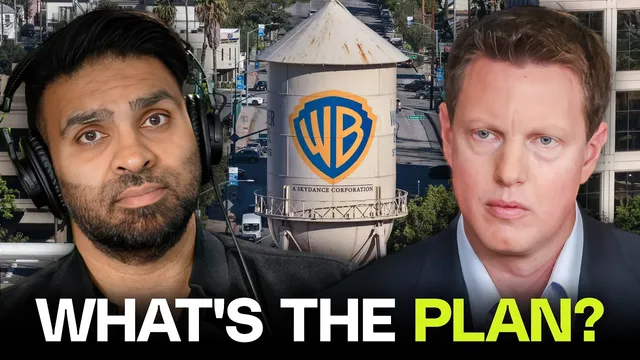
How Benn Jordan became Flock’s biggest headache
Benn Jordan tells Nilay Patel that Flock is the low-hanging fruit in a wider surveillance problem, and that government failed to set rules.
 Decoder · Nilay Patel with Benn Jordan
The best minutes
- 20:34Flock's network is only as secure as its weakest user3 min
- 12:14Flock's real change is a private, warrantless national network4 min
Also worth watching
- 9:03Flock was the easy target because of how it answered critics3 min
- 52:42Why he reported the Flock Forward guest list data instead of publishing it2 min
Skip the sponsor breaks, the Senate testimony recap, and the talk on misinformation and phone-listening myths.
Summary · 4 min read instead of 57 min
Benn Jordan is a musician with decades of experimental work who also takes products apart as a hacker. He lives in Atlanta, began investigating Flock Safety's automatic license plate readers about two years ago, and recently testified before the Senate Judiciary Subcommittee on Crime and Counterterrorism. Flock now talks to him and he reports vulnerabilities to the company.
Jordan argues that Flock became the face of a surveillance problem that Axon, Motorola and others share, and that government never tested or secured these networks. He says people cannot opt out of license plate readers, that no one has shown cameras reduce crime, and that Flock's network lets police search without a warrant. He describes the security holes he found and his Senate testimony, and proposes immutable public audit logs, opt-outs and local votes. Jordan says he now works with Flock to find solutions, and that he withheld a guest list he found because he wants to keep ethical standards.
Minute by minute
- 2:41
Government missed the Flock problem. Jordan says he has always been a musician and a hacker who takes products apart. He noticed Flock cameras in Atlanta about two years ago and then looked into their security. He says the current public reaction comes from people realizing the cameras have long existed, and he focuses on government's lack of transparency because companies will always chase taxpayer money.
- 5:08
People cannot opt out of license plate readers. Jordan says people are angry because they cannot opt out of Flock or Axon cameras and never voted on them. A phone can run a separate OS, lose Wi-Fi or stay at home, but a grocery trip still gets a vehicle tracked. He adds that people pay for this surveillance through property taxes, unlike a smartwatch or Echo.
- 7:16
Flock backlash is local democracy at work. Jordan says Flock and data centers have pushed people to learn who their mayor and council members are. He cites Asheville, North Carolina, where surveillance policy may help bring a new mayor. He regrets that Flock has become a buzzword: a Georgia candidate attacks Flock though as Atlanta's mayor he welcomed it, and cities swap in Axon, Motorola or Vercata.
- 10:17
Jordan says Flock's defensiveness made it the target. Jordan says Flock was the loudest and most defensive vendor, while other companies stayed quiet. He suspects a publicist told executives to repeat one line and dig in, a tactic he says wrecks most people who are not Donald Trump. Flock denied vulnerabilities and redefined words, and Patel adds that Axon works to stay anonymous.
- 11:57
Flock's shared network skips the warrant process. Jordan says older plate readers were often mounted on police cars. Flock built a private nationwide network where agencies opt in and share data, so an officer in Texas can search 30 days of movement in New York or Atlanta. He says this happens without a warrant, whereas earlier data sharing went through the National Crime Information Center and a magistrate judge.
- 20:25
Flock's network has deep security flaws. Jordan says that in early 2025 Flock did not require multi-factor authentication, and he saw an officer log in from non-police Wi-Fi. He found Flock credentials from a Russian vendor on the dark web, along with camera hardware flaws, open admin interfaces and plain text credentials. He says the weakest user sets the network's security, and he would limit access to one trained person per department.
- 25:50
Senate testimony aimed at lawmakers. Jordan says he testified so that senators who co-sponsored measures like FISA-702 could not claim they were never warned by an expert witness. He says Flock is a for-profit startup and the legislator's job is to protect people from it. He welcomes the bipartisan anger and notes Flock already does some of what Senator Josh Hawley proposes.
- 31:47
Reality is scarier than the phone listening myth. Patel says he can no longer confidently debunk claims that phones listen. Jordan says an ad for horse riding lessons after a conversation reflects algorithms predicting what a user will think from patterns and transaction history. He says listening is among the least efficient things companies could do, and that data brokers like LexisNexis would anger people more than Flock.
- 40:32
Camera claims are sales tactics needing research. Jordan says claims from Flock's Garrett Langley and Ring's Jamie Siminoff are sales tactics built on cherry-picked data. He says criminology has not even proven that more police reduce crime. He suggests asking neighborhoods about narrow deployments, such as 24-hour retention with public audit logs, and urges people to find which council members approved contracts and consider running.
- 45:20
Jordan keeps an olive branch toward Flock. Jordan says some Flock staff dislike him while others, including the CEO and executives, will discuss solutions. He argues that if Flock vanished, Axon, Verkata and Palantir would repeat its approach more efficiently. He says someone high up at Flock told him the company wants guardrails, but lawmakers mostly say Flock is bad.
- 48:22
Stunt journalism requires honesty and nuance. Patel asks whether Jordan can stay aggressive while working with Flock. Jordan says he must be honest and keep nuance. He found the Flock Forward guest list by decompiling the app, but reported it to the company instead of releasing it, because he says he cannot criticize police data misuse and then release breach data.
Published Oct 15, 2026.