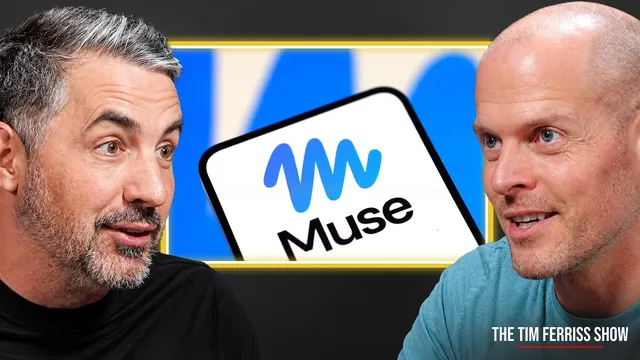
Full episode · 1 h 47 m
The Random Show — AI Super Assistants, Dream Engineering, Wizards, Supplements, and More!
Kevin Rose and Tim Ferriss argue that AI assistants running over text are already taking over daily logistics, then trade notes on supplements and dreams.
 The Tim Ferriss Show · Tim Ferriss with Kevin Rose
The best minutes
Also worth watching
- 1:08:11AI can front-run idea books; lived experience is the moat4 min
Skip the long supplement run from beta-alanine to protein shakes, and the man makeup and book recommendations segment.
Summary · 4 min read instead of 1 h 47 m
Kevin Rose is Tim Ferriss's longtime cohost on The Random Show; the two met at the party on the day The 4-Hour Workweek came out. Rose says he has built many products over the years, writes the KevinRose.com newsletter and put a small angel check into the skincare company One Skin.
Rose argues that in roughly the last three weeks AI has crossed an inflection point, with proactive assistants such as Instinct, Meta's Muse and ChatGPT's Dots handling email, prescriptions, flights and reservations, and he predicts AI front ends will displace destination sites like Amazon. Ferriss lays out the climbing study behind his beta-alanine use, walnut research on sperm quality, and Stanford work on propofol-induced dreams that relieved complex PTSD, which he takes as evidence that the psychedelic trip matters. Both warn about outsourcing too much to AI; Ferriss refuses to let it write his new book on saying no and focus. Ferriss draws a lesson from Fifty Shades of Grey about simple premises, and explains why he may publish through Authors Equity, possibly with a single print run.
Minute by minute
- 1:23
Proactive AI assistants have arrived. Kevin Rose names Instinct, Meta's Muse and GrokBot as a new class of assistant. Instinct works through iMessage via a phone number; after he connected his Google account it flagged a missed DocuSign and told him when to pick up a prescription before his flight. He says the startup went from zero to 10 billion in valuation in about four months. Tim Ferriss raises privacy, and Rose says he trusts Muse more because Meta is used to regulatory scrutiny.
- 6:55
Memory becomes the lock-in. Rose says Instinct changed flights for him and used his OpenTable login to grab a hard-to-get reservation, and that friends' Instinct bots can negotiate schedules with each other. With ChatGPT now offering Dots, he argues AI enthusiasts currently have zero loyalty to models, but an assistant holding your life's history and authorizations becomes a durable wedge companies will lock down.
- 16:28
Beta-alanine for climbing endurance. Ferriss, back to rock climbing at 180 pounds, avoids creatine because of water weight. He cites a double-blind study of 15 elite climbers taking four grams a day for four weeks: 57% longer before falling versus 19% for placebo, and 10 extra moves versus four. He takes about 6.4 grams a day, eight Thorne sustained-release pills, and warns of tingling called paresthesia.
- 23:15
Watch contaminants and creatine dosing. Ferriss warns that many psyllium husk brands carry heavy metals and names Yerba Prima and Organic India as brands whose testing looks good. Rose says 10 grams of creatine gave him hand and foot cramps, so he takes five, and that BodyTech Elite's delayed-release Creatine Beadlet is the first that does not upset his stomach.
- 34:59
Simple protein and road-proof nutrition. Rose recommends Pioneer Pastures A2 protein drinks, which he says have 160 calories, 30 grams of protein and far fewer ingredients than Muscle Milk. Ferriss describes training for an archery competition in Lancaster, Pennsylvania using only gas-station foods such as Muscle Milk, almonds, zero-calorie Monster and unsweetened iced tea, so his nutrition could not be broken on the road.
- 41:05
Dream engineering and brain stimulation. Ferriss describes Dust, a startup from Dr. Adam Haar Horowitz in which he is an investor, aimed at modifying dream content for conditions like PTSD. He favors neuromodulation over psychedelics for most people and backs Ampa Health, whose one-day protocol with D-cycloserine took his OCD and generalized anxiety from about an eight or nine to zero or one. He says its provider device costs about three grand a month.
- 47:55
Anesthesia dreams may resolve trauma. Ferriss summarizes Stanford research using propofol as patients emerge from anesthesia, with EEG monitoring and at least 10 minutes of quiet emergence. Patients who rehearsed a better ending to their trauma reported zero complex PTSD symptoms 10 months later. He argues this suggests the psychedelic trip matters, countering companies developing non-hallucinogenic drugs that treat the trip as a side effect.
- 1:00:31
Electricity may replace some pills. Ferriss reads a study in which brain-stimulating contact lenses matched fluoxetine at reducing depression signs in mice, while cautioning that mice are not little humans. He argues bioelectric medicine will grow, and notes anesthesia is poorly understood: some anesthetics are inert, and their effect may be physics rather than chemistry.
- 1:08:11
Be careful what you outsource. Ferriss says he will not let AI write his new book because it is too good, and uses it only for tasks like version control. Rose points to Every's writing harness and says a leaked book could be rewritten and published in 48 hours. Both see reputation and lived experience as the defense, and Ferriss says he would rather write for 10,000 readers than make short videos for millions.
- 1:41:31
Will AI free up leisure. Rose is bullish that AI will handle day-to-day tasks and leave more time for in-person life, though he admits he spends the saved time on AI coding. Ferriss is skeptical, saying many technologies promised leisure and something always fills the gap, and worries about people preferring frictionless digital companions. Earlier he recommends Shawn Smucker's essay Please Use AI and a Kurt Vonnegut passage about buying one envelope.
Published Oct 10, 2026.