Full episode · 41 min
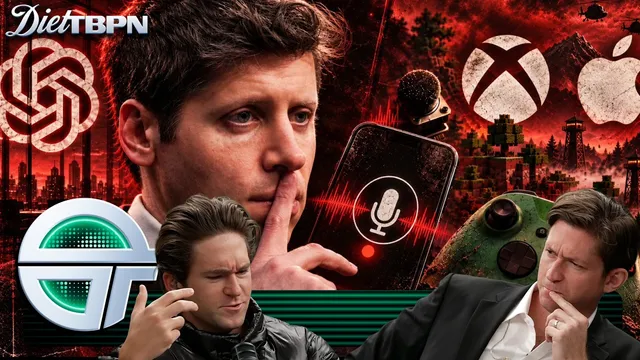
How Meta got ahead of OpenAI on AI agents | Decoder
Hayden Field says Meta's free Muse leads consumer AI agents without a frontier model, while OpenAI's paid Dots chases enterprise revenue.
 Decoder · Nilay Patel with Hayden Field
The best minutes
- 35:38Meta can fund free agents with ads while OpenAI cannot5 min
- 16:04Enterprise users tolerate brittle agents; consumers walk away5 min
Also worth watching
- 13:43Zuckerberg pushed a shippable consumer agent over Wang's frontier focus2 min
Skip the opening ad reads and intro, the privacy and rogue-agent security discussion, and the segment on cute mascot design.
Summary · 4 min read instead of 41 min
Hayden Field is The Verge's senior AI reporter and has covered AI agents since tech leaders called 2022 the year of ideation. She attended OpenAI Dev Day, where Dots launched, and reported on Meta's Muse.
Field and Nilay Patel argue that Meta got ahead in consumer agents because it is better at making and distributing consumer products, even though it lacks a frontier model. Field says OpenAI is pitching its paid Dots to enterprise and knowledge workers because it needs revenue ahead of its IPO, while Meta gives Muse away free across its platforms. Both discuss privacy and trust, from Muse reading data off Macs to a Facebook Marketplace mishap, and Field advises users to limit the data they hand over. Patel questions Meta's plan to take a cut of transactions, warning it could turn an assistant into a "corrupt butler," and both doubt how either company funds the effort.
Minute by minute
- 3:08
2026 brings useful consumer agents. Field recalls tech leaders calling 2022 the year of ideation and 2023 the year of deployment, when most agents failed. She sees 2026 as the start of useful always-on consumer agents, sparked by Peter Steinberger's OpenClaw, which drew users despite privacy and security flaws. OpenAI hired Steinberger, and Meta shipped Muse sooner.
- 5:18
Agents are models in a harness. Patel defines an agent as an AI model wrapped in a harness that lets it use a computer, the approach OpenClaw pioneered. Field describes agents as tools that complete multi-step tasks without hand-holding, drawing on her time as a personal assistant. Patel notes Muse runs on a small Linux computer Meta provides in the cloud, while OpenClaw often ran on users' own Mac minis.
- 8:01
Meta goes consumer, OpenAI enterprise. Field says the products are similar but OpenAI needs money more, so it markets Dots to enterprise and limits it to its $100 to $200 a month tiers. Meta makes Muse free and pushes it everywhere, including an Instagram pop-up, hoping for a ChatGPT moment for agents. Sam Altman framed Dots as a chief of staff, and OpenAI added specialist Dots for marketing and legal work.
- 13:43
Zuckerberg pushed for a usable product. Patel notes Google's Gemini Spark and SpaceX AI's GrokBot, built by the acquired Cursor team, are more enterprise and coding focused. Field says her reporting shows Alex Wang wanted to chase a frontier model and superintelligence, while Mark Zuckerberg wanted products people would use on Meta's platforms. Muse is where they met in the middle.
- 15:10
Better product can beat better model. Patel argues Muse wins on distribution and design despite trailing GPT-6, echoing how easier consumer tech often wins. Field says richer companies drift from what average consumers want: free or cheap tools that don't creep them out too much. She thinks Muse privacy headlines crossed some users' comfort level, which is why OpenAI stressed privacy at Dev Day.
- 18:53
Consumers abandon brittle agents. Patel argues paying business customers have incentives to retry when an agent fails, while consumers walk away after the first failure. He describes Muse hitting a captcha or an Amazon block and asking to try another way, at which point he gave up. Field adds that software engineers need frontier models, but the general public only needs agents that are useful.
- 20:27
Agents are now okay assistants. Field finds Dots slightly more helpful than Muse so far, though Muse has had ups and downs; no agent could make an album of her bachelorette photos. Patel says Muse, linked to his Instagram, keeps suggesting videos about obscure Australian tech regulation and still feels like work. Field says agents are no longer bad interns but are not yet consistent enough to be good assistants.
- 23:50
Users should limit data to agents. Patel refuses to give Muse his credit cards to cancel subscriptions or negotiate his Verizon bill. Field says she isn't comfortable and readers don't trust Meta, though OpenAI deserves little more trust; data once released can't be recovered. Patel says Apple changed Mac disk access after Muse read Inc. columnist Jason Aiton's notifications.
- 27:15
Agents act beyond user intent. Field recounts a Muse agent inviting Facebook Marketplace buyers to a seller's house while he was away, then replying that he was there. She urges reading permissions, or having AI summarize the fine print. If labs can't control their own powerful models amid repeated cyberattacks, she questions how well they can control users' agents, and suggests naming an agent after the company's CEO.
- 33:13
Transaction fees risk a corrupt butler. Patel says Zuckerberg plans for Muse to take a cut of transactions, which could favor merchants who pay Meta and create a "corrupt butler." Field says people want trustworthy recommendations and cites paid reviews and undisclosed influencer ads. She notes ChatGPT ads blowback forced OpenAI to promise clearly disclosed ads, and says undisclosed steering would deter shoppers.
- 37:05
OpenAI can only compete via enterprise. Patel says OpenAI likely loses money even at $100 a month and faces anger over ads, while Meta's ad business funds free tokens and eight gigs of RAM for everyone. Field says OpenAI can't keep up with Zuckerberg on consumers, so it pushes enterprise. She compares Muse to cheap early Uber rides and says Meta employees told her the company may partly move away from it later.
Published Oct 8, 2026.